 ThinkScope
Opening Hook
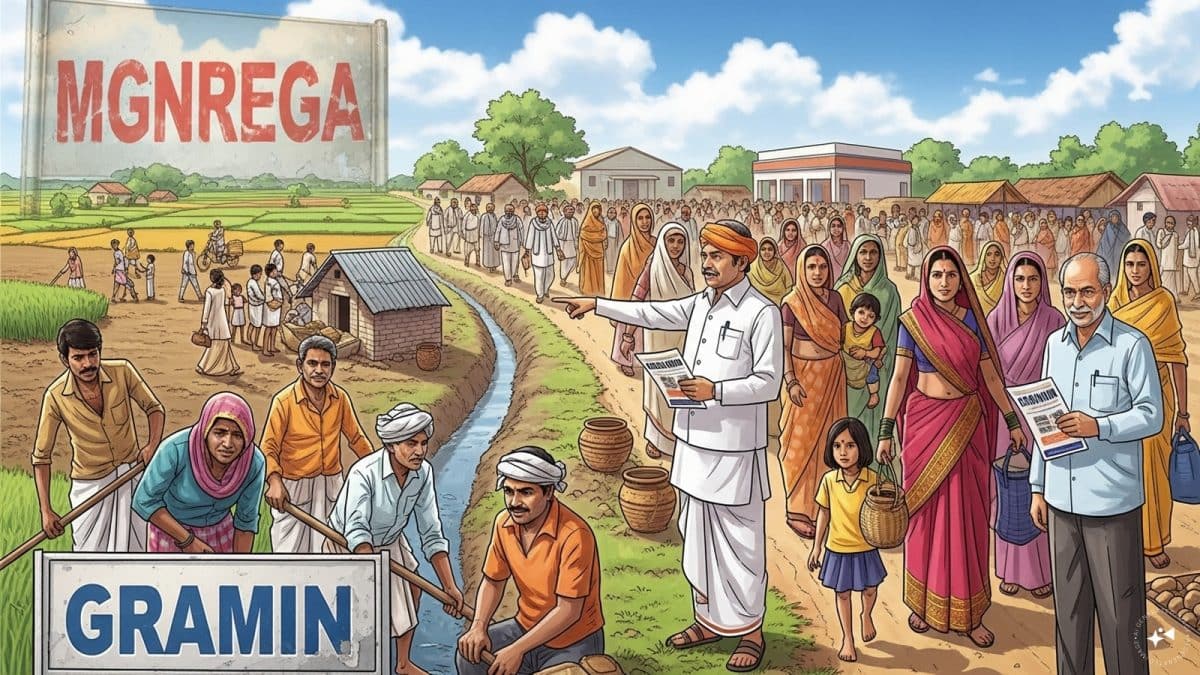
Imagine a vibrant rural landscape where every able adult has the opportunity for gainful employment, ensuring prosperity at grassroots levels. This vision is steadily turning into reality with the NDA government's new GRAMIN scheme, an evolution from its predecessor, MGNREGA.
Context & Background
In the corridors of power in New Delhi, the passage of the GRAMIN bill marked a pivotal moment in India's socio-economic trajectory. Union Agriculture Minister Shivraj Singh Chouhan, a key architect of this initiative, championed the need for a modern statutory framework that resonates with the Viksit Bharat 2047 vision. This initiative provides a guarantee of 125 days of wage employment per rural household, surpassing the 100 days offered by the previous MGNREGA framework.
The journey from MGNREGA to GRAMIN is not merely a change in nomenclature but a strategic overhaul aimed at enhancing rural livelihoods. Launched in the early 2000s, MGNREGA was a flagship program under the UPA government, designed to alleviate rural poverty through employment guarantees. However, evolving needs and aspirations have necessitated this new chapter.
Main Story/Details
The GRAMIN scheme, officially introduced in the Lok Sabha this week, promises to be a game-changer. Unlike its predecessor, it not only extends the number of guaranteed workdays but also broadens the scope of work to include semi-skilled tasks, thereby offering skill enhancement opportunities.
In Madhya Pradesh's Sehore district, farmers like Ramesh Kumar have already begun to see the benefits. "With GRAMIN, we can plan our lives better," Ramesh shares. "It's not just about survival; it's about growth."
The scheme's inclusive approach is designed to integrate with digital platforms for transparency and efficiency. The use of mobile applications for job applications and attendance tracking reduces bureaucratic delays and ensures quick disbursement of wages—a much-needed relief for rural workers.
Expert Insights/Analysis
Policy analyst Dr. Anita Sharma notes, "The GRAMIN scheme reflects a deep understanding of rural challenges and leverages technology to bridge gaps in implementation." She highlights the strategic emphasis on skill development as a key differentiator that could lead to long-term economic empowerment.
Future Implications/What's Next
Looking ahead, the GRAMIN scheme is positioned to catalyze a broader transformation in rural areas. As India aims to become a $5 trillion economy, initiatives like GRAMIN could play a pivotal role in uplifting rural communities, thus contributing significantly to national growth.
Moreover, the integration of technology and skill enhancement aspects suggests that the scheme could serve as a model for other developing nations grappling with similar challenges.
Conclusion
The GRAMIN scheme is more than a welfare initiative; it's a beacon of hope for India's rural populace. By addressing contemporary needs while building on past successes, it underscores a commitment to inclusive growth and sets a promising precedent for future policy-making.